TL;DR: Wider dash cam views capture more of the road, but they also stretch shapes and blur important details like licence plates. To get footage you can actually rely on, it’s best to choose a setup that strikes a balance between angle, clarity, and overall lens quality.
Key Takeaways:
Many drivers believe that the wider the dash cam’s viewing angle, the safer they’ll be. It seems logical: capture more of the road and you should be better protected, but in reality that idea can be misleading when you see how it affects the footage.
What often gets missed is how that extra width can change the look of the footage.
Straight lines can appear bent, cars may look stretched, and licence plates might be harder to read when they fall near the edges of the frame.
Let’s break down what really matters when choosing the right lens.
The importance of viewing angle in dash cams comes down to how much of the road the camera can capture, measured in degrees. The viewing range—often referred to as the dash cam angle—is like giving your dash cam a pair of eyes and deciding how far to the sides it should see.
A lens with a 120° angle offers a closer, more natural view that feels true to life, while angled cams with a 170° lens capture almost everything in front and to the sides, creating a wider, fisheye-style view of the road.
Yes, a wide lens can capture more of what’s happening around your car. That means you’ll often see:
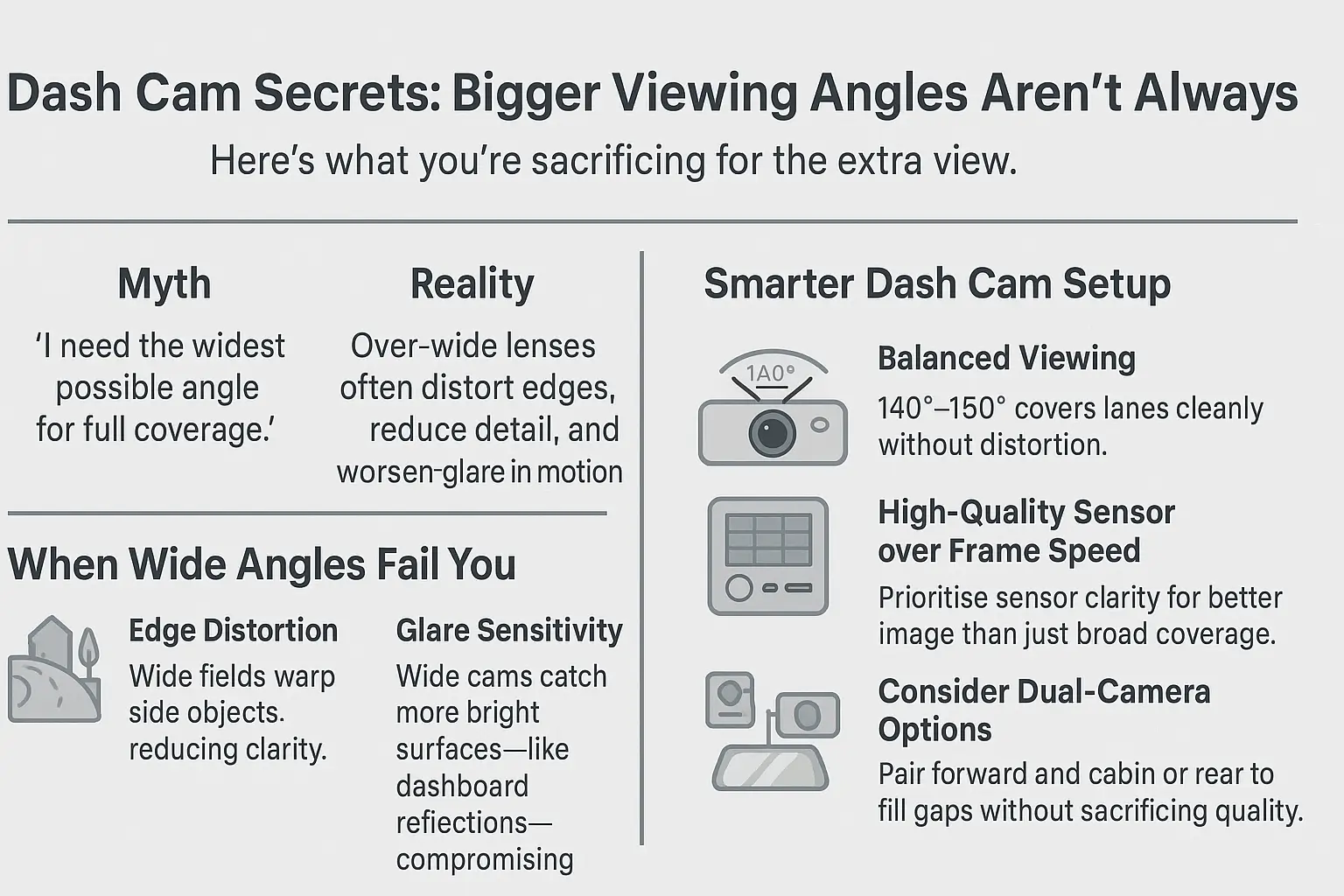
But here’s the drawback: the more the camera tries to squeeze in, the more the image bends. Cars can appear stretched or farther away than they are, and key details like licence plates may lose sharpness.
If you’ve watched dash cam footage where the edges look curved or stretched, you’ve seen distortion.
Distortion is when the lens bends straight lines and alters shapes in an attempt to capture more of the scene, and it’s especially common with very wide lenses.
This visual warping can make distances look deceptive and blur the fine details you rely on, such as number plates or street signs.
A camera might boast 4K resolution, but that doesn’t automatically mean the footage will be crystal clear. If the lens is cheap or poorly made, even the highest resolution will look soft and disappointing.
True sharpness comes from the whole setup working together: quality glass in the lens, a decent sensor size to handle light, and an aperture that balances brightness and detail.
All of these pieces decide how sharp and reliable your recordings will be.
Here’s a quick guide to help you understand what’s practical:
This range is ideal for everyday city driving where detail matters most.
It gives a natural and realistic view of the road, keeps cars and signs looking sharp, and limits bending around the edges so the footage feels true to life.
This is often the sweet spot for most drivers. It shows a wide portion of the road while keeping cars and street signs looking realistic, so you get useful coverage without much distortion.
This angle is handy for fleet vehicles or drivers who face higher risks on the road.
It captures almost everything in front and to the side, but the footage can bend more at the edges and make details like licence plates harder to read.
Yes, they do. Rear and cabin lenses are designed differently because they don’t need to capture as wide a view as the front camera.
For a deeper look at the pros and cons of different dash cam setups, you can also check our guide on front vs rear vs 3-channel dash cams.
At night, wide lenses often have a harder time because they spread incoming light across too much of the sensor. This can make the picture grainy, dark, or lacking in detail.
If you drive after dark often, focus on dash cams with larger apertures that let in more light and sensors built for low-light performance.
Some models also include night vision features or software that boosts brightness without adding too much noise.
It’s easy to be impressed by numbers like “170° viewing angle.” On paper it looks like maximum coverage, but those figures don’t tell the whole story.
The real test is the footage you can actually see with your own eyes.
Before buying, make sure to watch sample recordings in both daytime and night conditions, and read reviews from other drivers.
Specs alone can’t reveal how well the camera handles glare, low light, or fast-moving traffic, and those are the details that matter most on the road.
For more information on how misleading specs can be, check out this article on the dash cam lies you might be falling for.
At DNH DashCam Solutions, we help you cut through the noise and pick the right dash cam for your needs. We don’t just sell cameras; we guide you to the setup that protects you best.
Based in Sydney, we proudly support drivers across Australia with expert advice, trusted products, and professional installation services.
Our recommendations aren’t just about sales; they’re products we’ve tested, trust, and would confidently use in our own vehicles.
Your dash cam is there to protect you, not confuse the situation with distorted or unclear footage. Getting the right balance of angle, clarity, and quality makes all the difference.
Contact DNH DashCam Solutions today to book a consultation and explore the best dash cam setups for your vehicle.